Slate roofing
& re-slating.
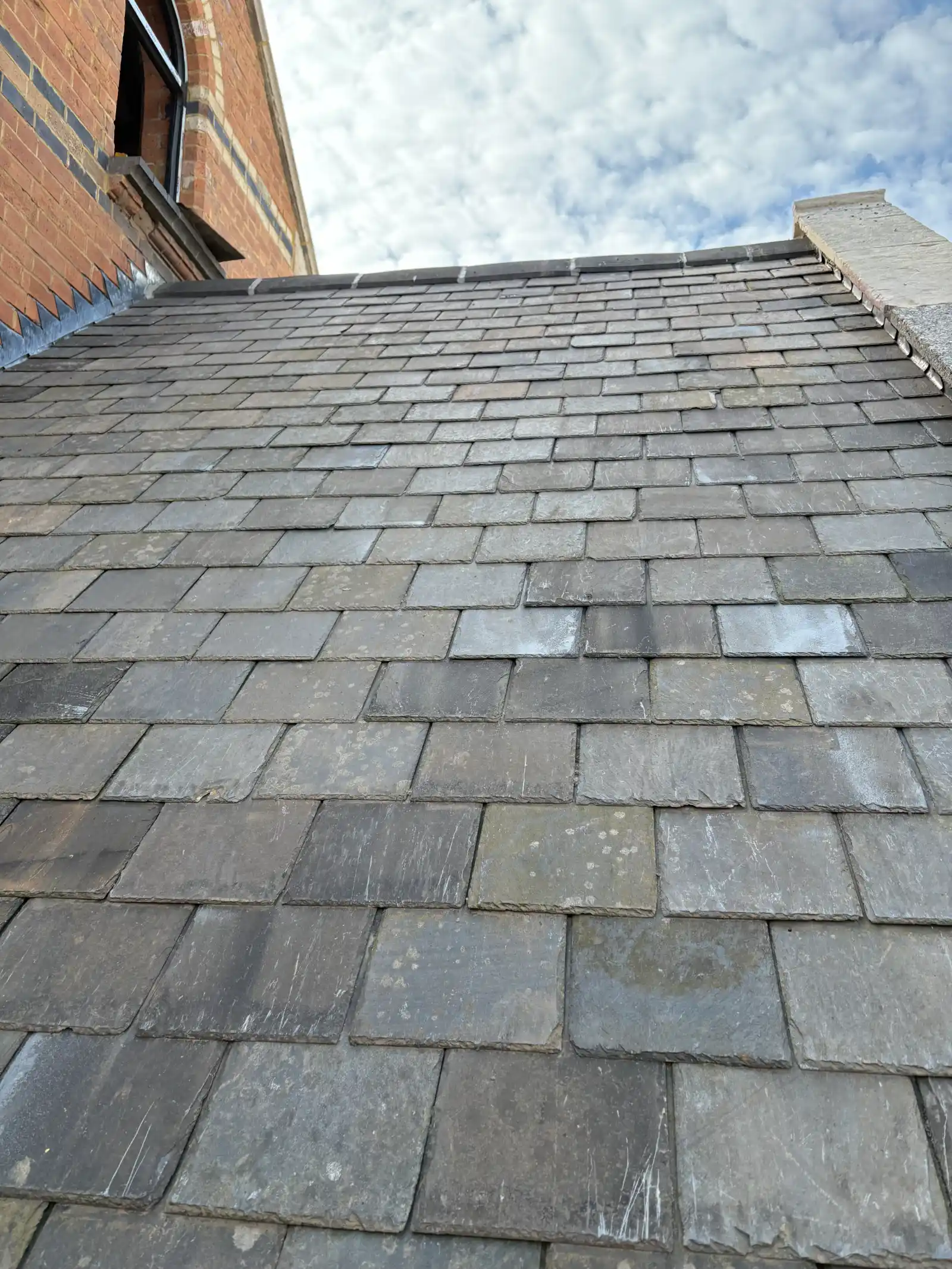
Swithland, Welsh and natural slate — properly sourced, correctly fixed, built to last a century. Conservation area or new build, we know what's needed.
How we install
natural slate.
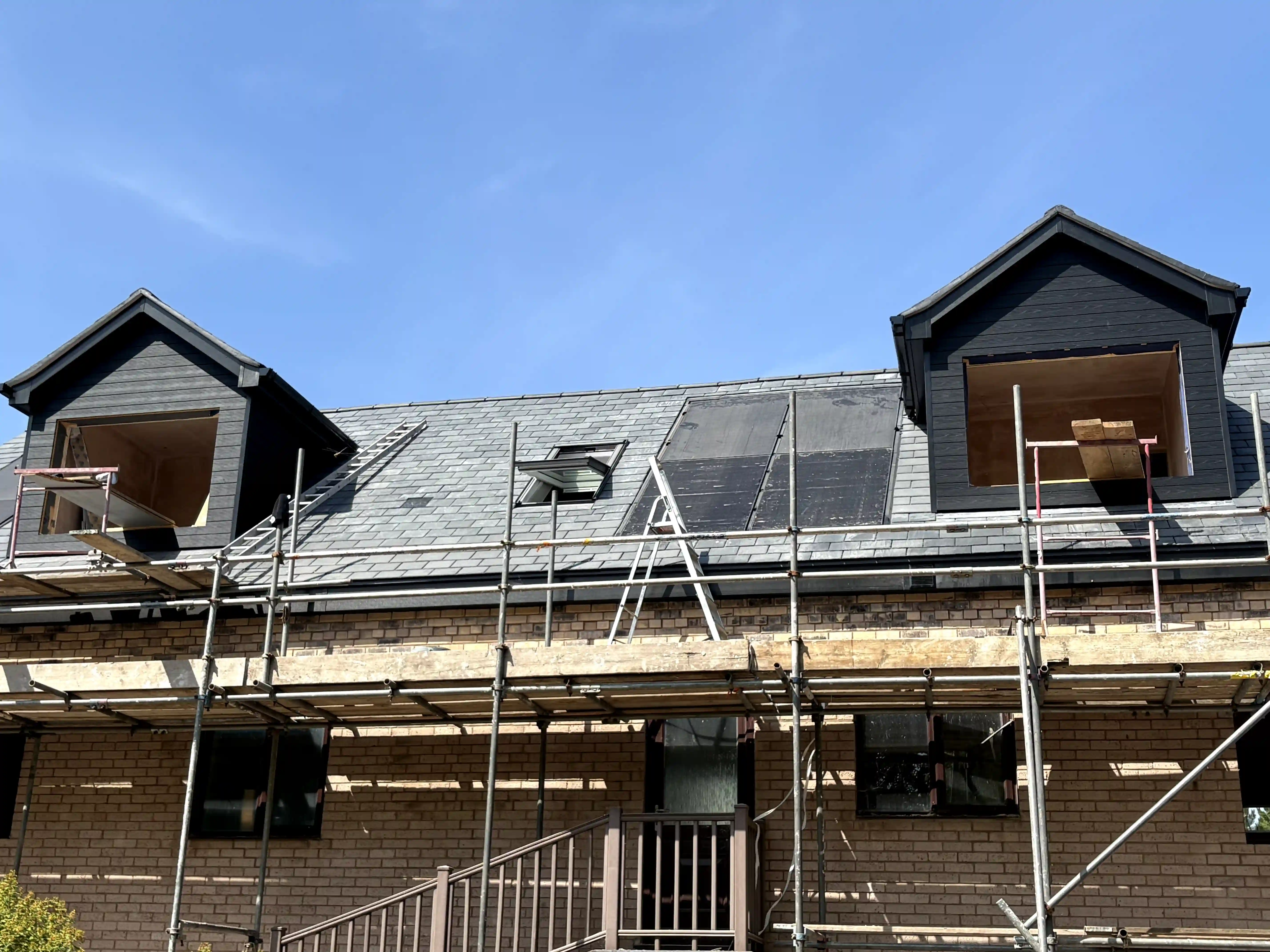
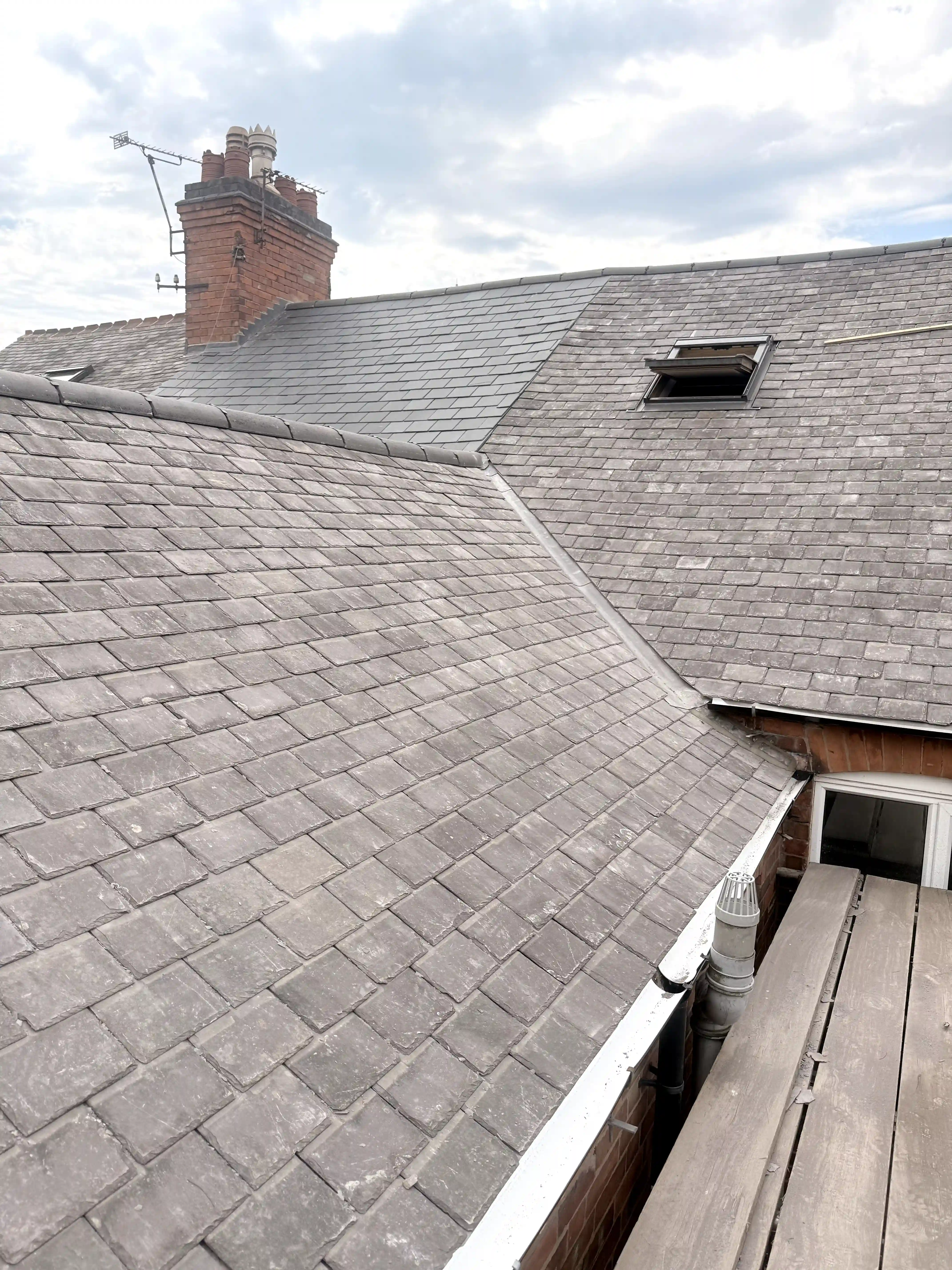
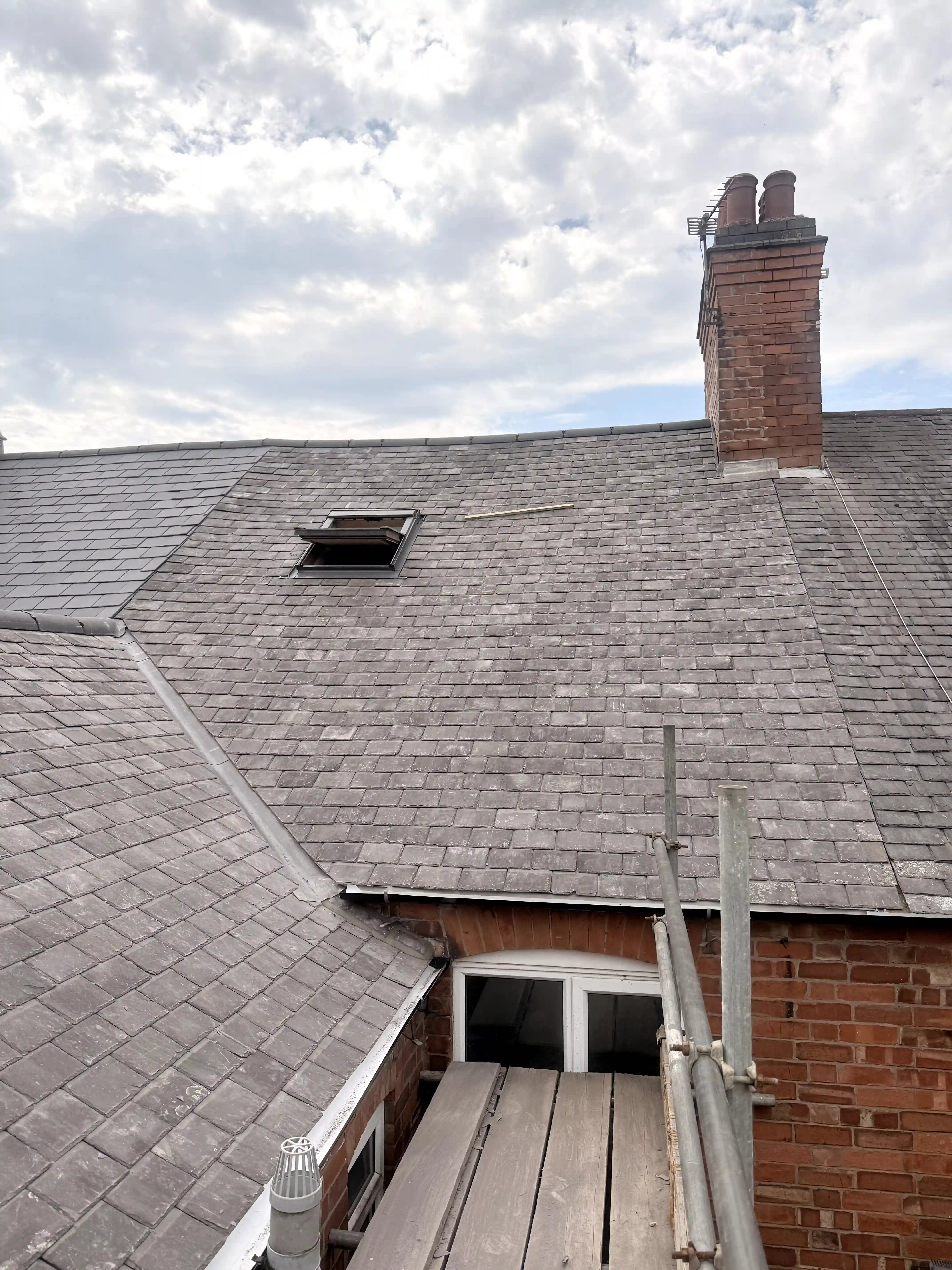
Natural slate is still one of the best roofing materials available — but it's only as good as the installation. The right nail, the right gauge, the right lap for the pitch. Skip any of these and you'll have leaks within a few years. We've been laying Swithland and Welsh slate since Adam started in the trade — we know exactly what's required, including what Leicester City's conservation officers expect when matching original materials.
Survey & material match
We look at what's already on the roof (or what planning requires) and source slate that matches as closely as possible — Swithland, Welsh, fibre-cement or recycled natural.
Scaffold & strip
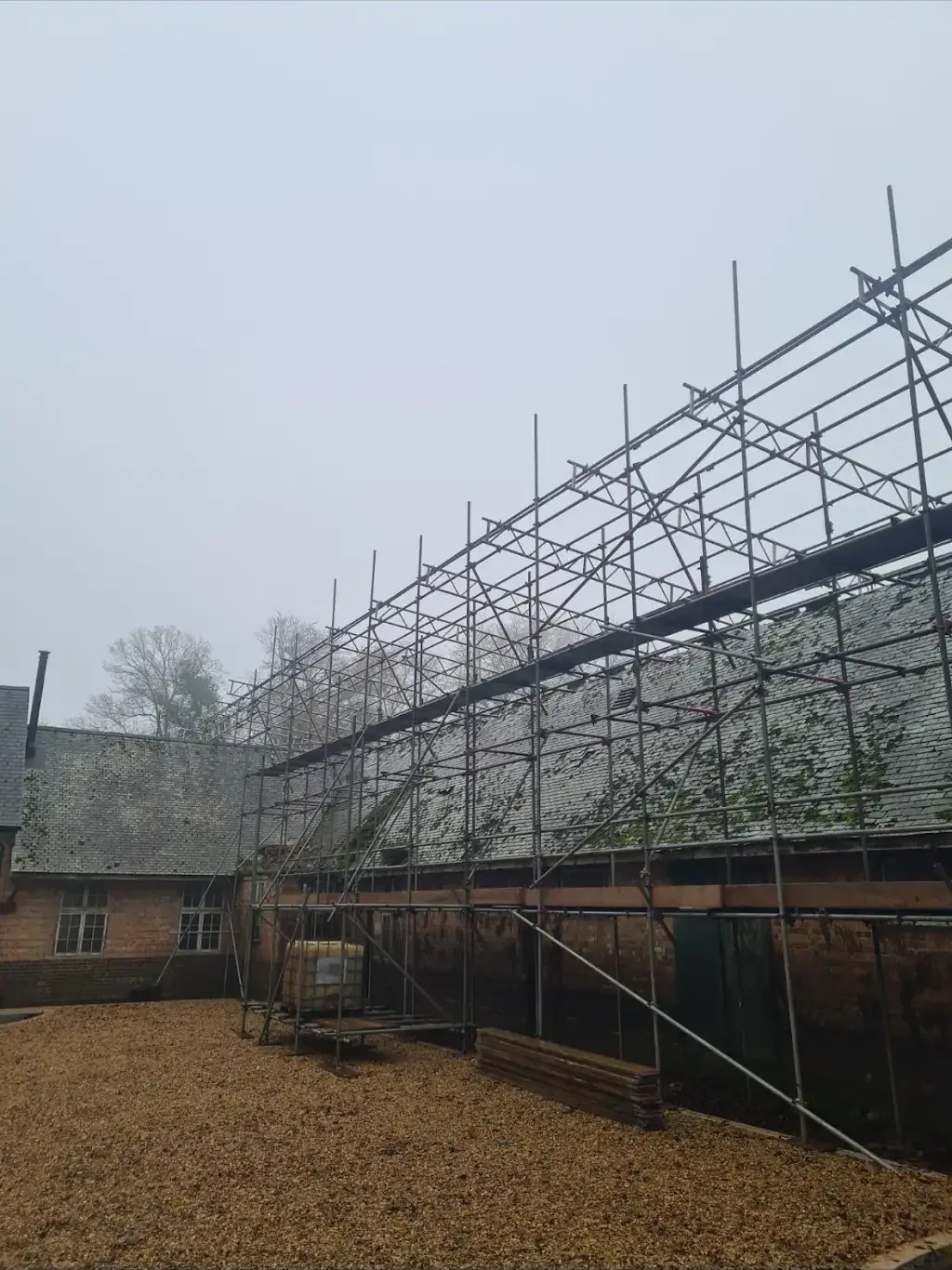
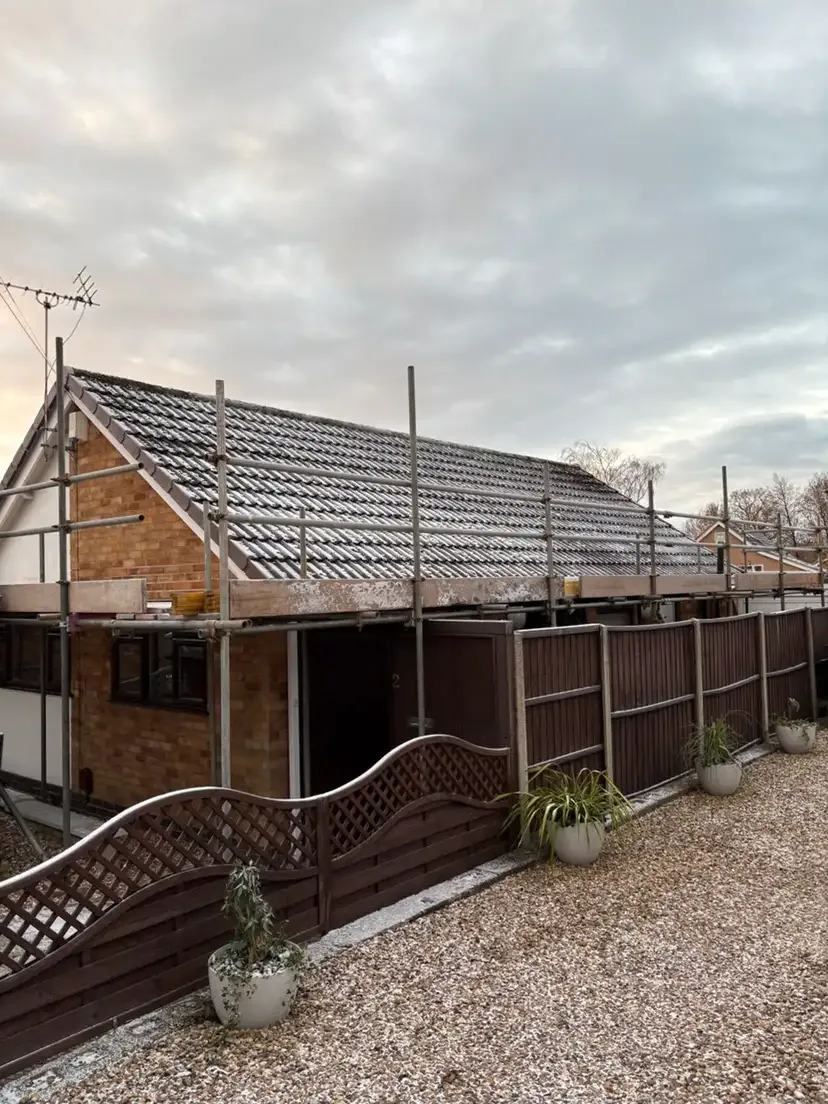
Existing covering stripped back to bare timbers. Scaffold always included — you can't handle natural slate safely off a ladder.
Timber check
Every rafter, valley board and wall plate inspected. Rotten timber replaced before the new underlay goes on.
Breathable membrane
Modern breathable underlay across the whole roof — essential under slate to allow the structure to breathe without letting moisture in.
Treated battens
New pressure-treated timber battens fixed at the correct gauge for the slate being used. The gauge determines whether rainwater runs off properly at the lap.
Slate fixing
Each slate fixed with the correct-length copper or stainless nails — gauge, lap and nail length calculated to suit the pitch. No shortcuts.
Ridge & details
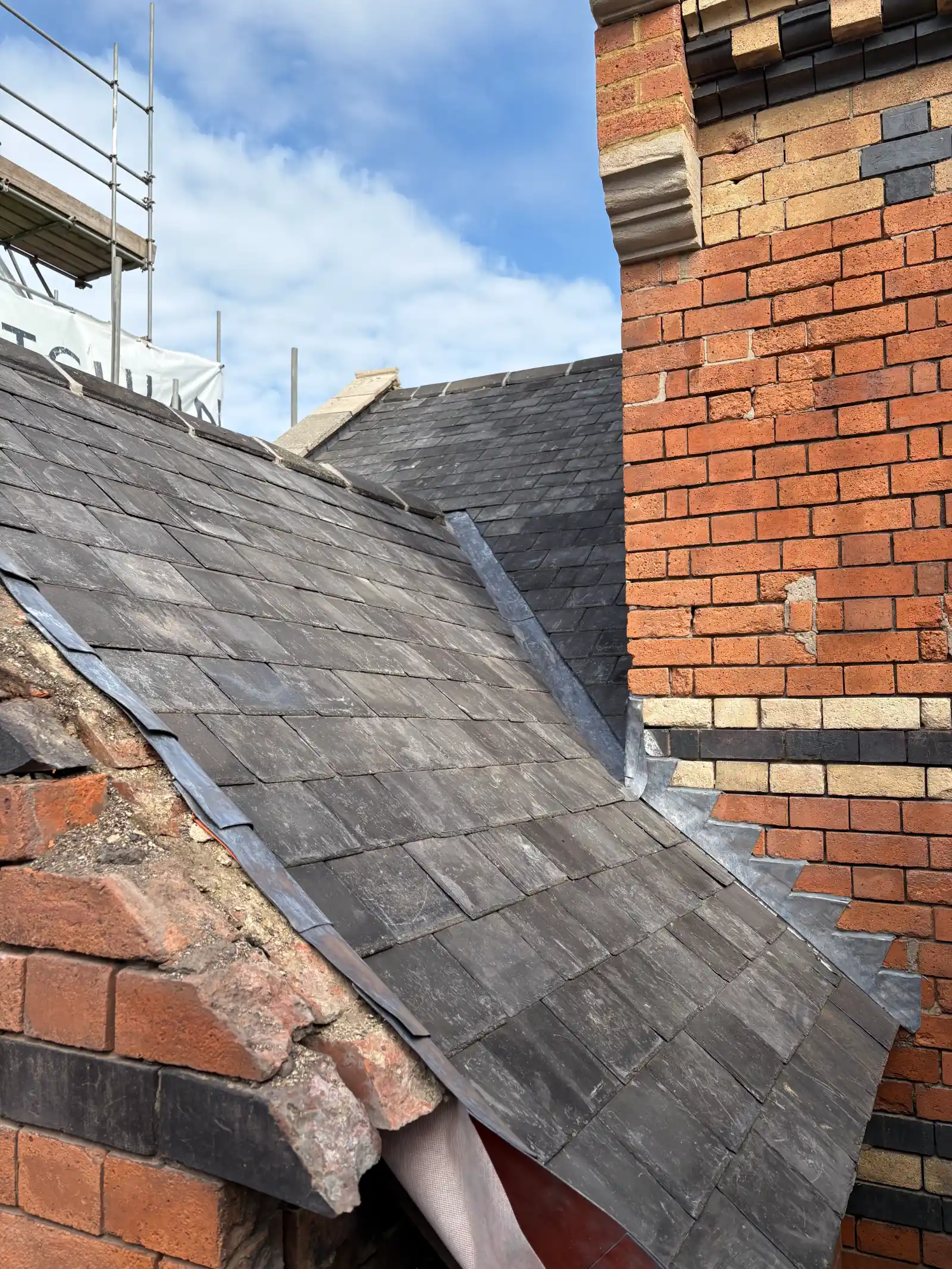
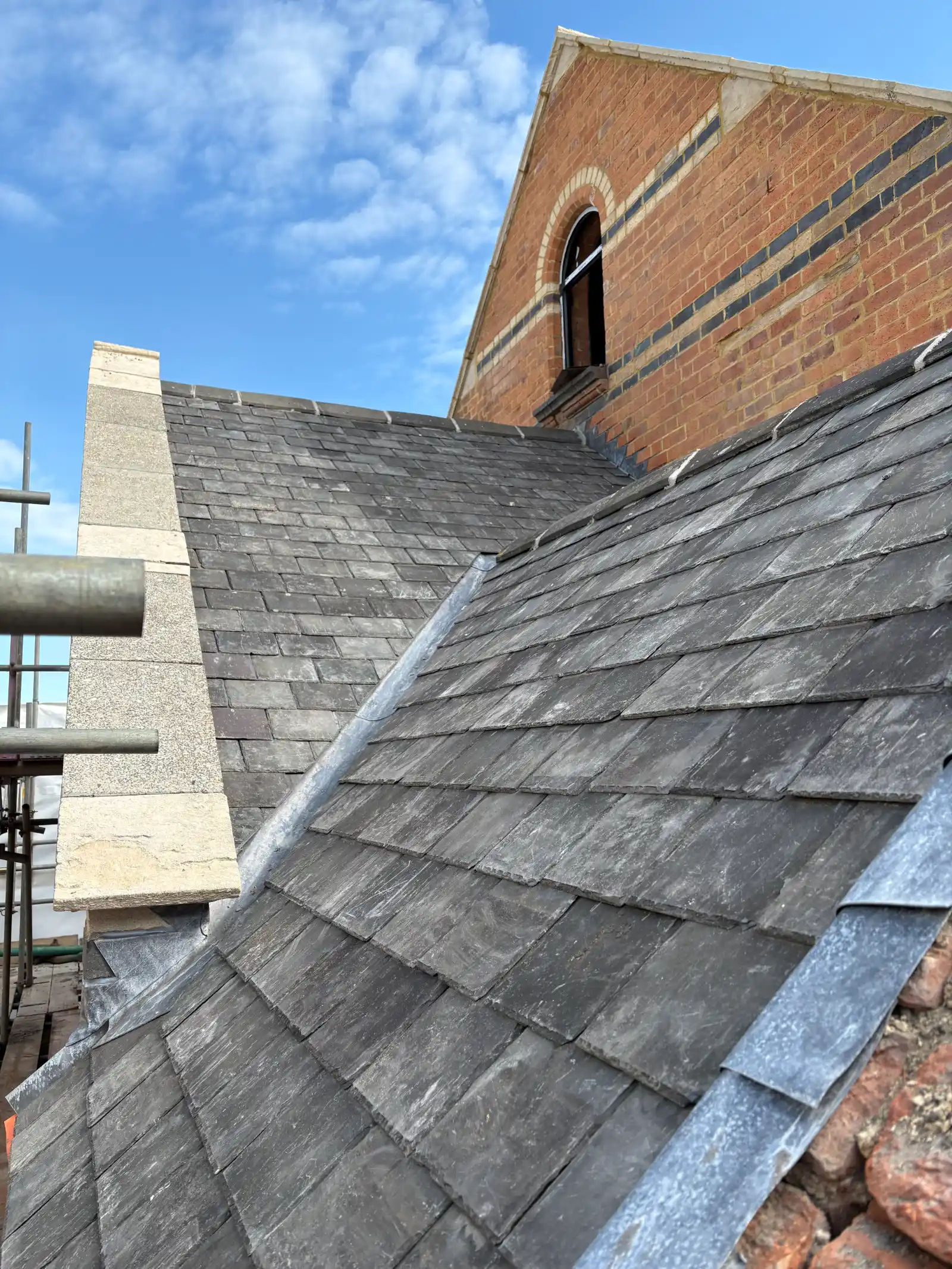
Ridge tiles or dry-fix ridge system, lead valleys dressed, all hips and abutment flashings finished before scaffold comes down.
Why choose A.P Roofing
for your slate roof?
26 years with natural slate
Adam started on slate roofs at 16 and hasn't stopped. He can tell Swithland from Welsh from fibre-cement at a glance and knows which suits which property.
Conservation area specialists
We know what Leicester City's conservation officers require — from matching the original slate species to the correct fixing method. We'll advise before you spend a penny.
Correct material every time
We source from reputable suppliers. No second-grade slate, no unsuitable substitutes. If a material won't last, we won't use it.
No payment until done
We don't ask for a deposit and you don't pay until the job's finished and you're satisfied. Simple.
Same crew, every job
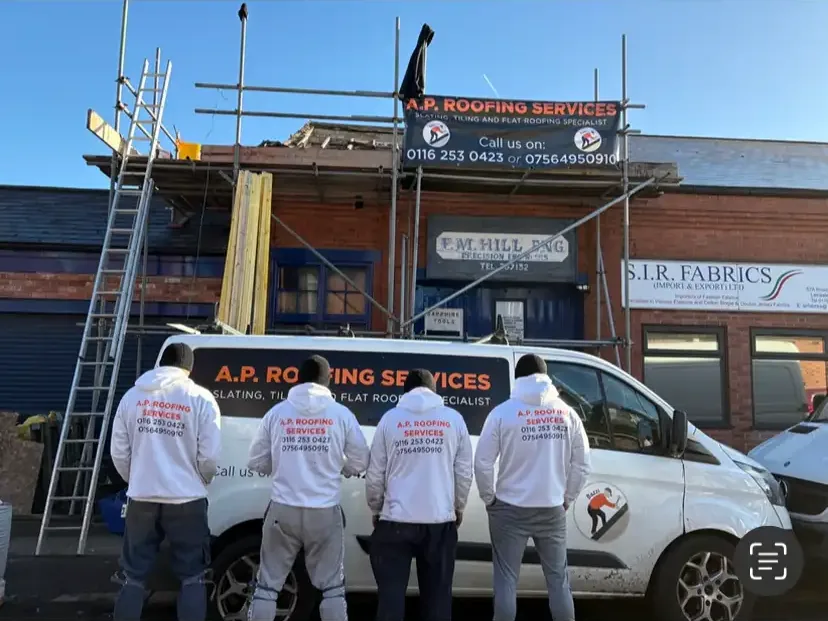
Four lads. The team that quotes is the team on the roof — no subcontractors, no strangers on your property.
Photos throughout
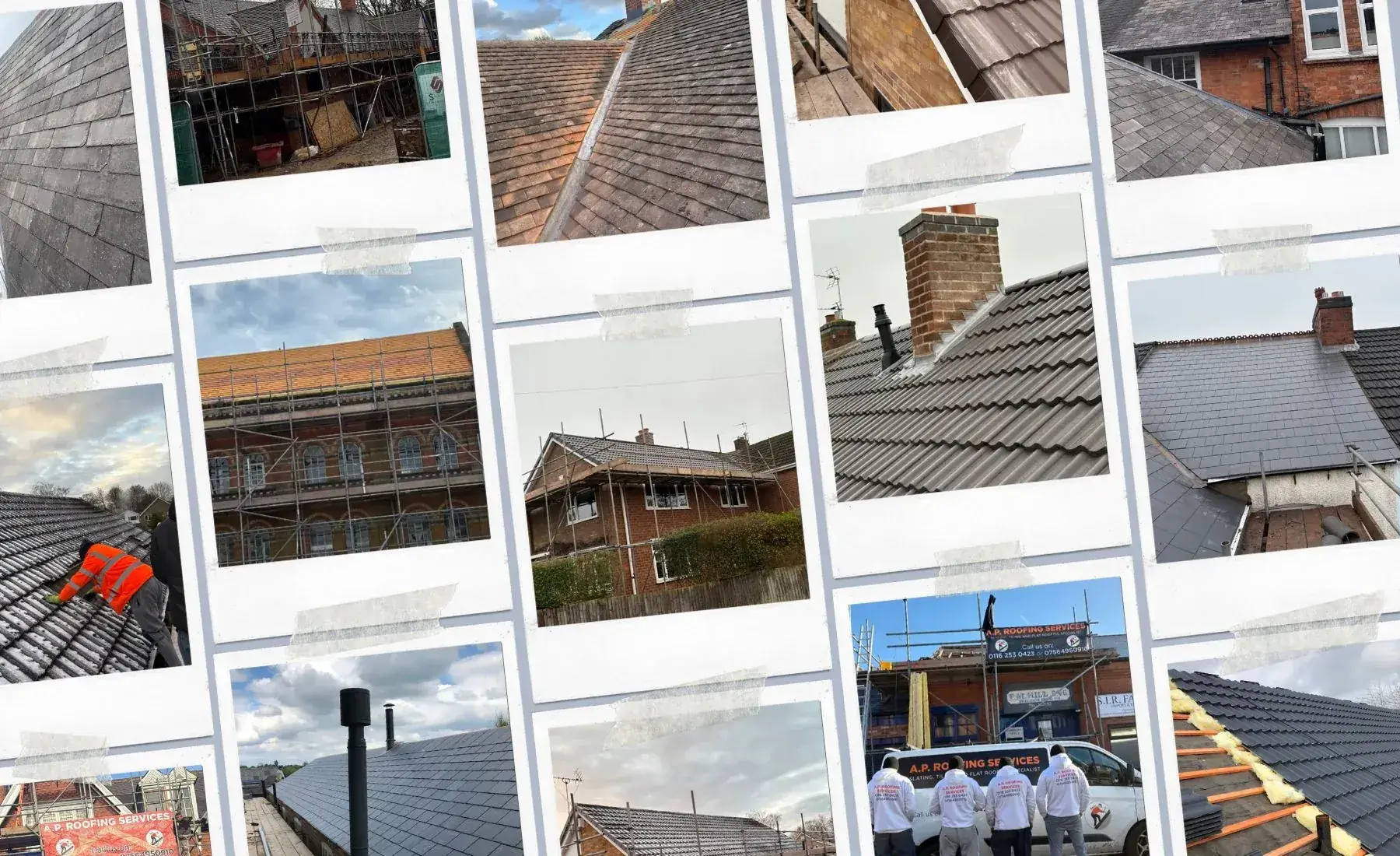
Before, during and after — you see the structure, the fixing and the finished result. Every time.
Second hand
Welsh slate roof.
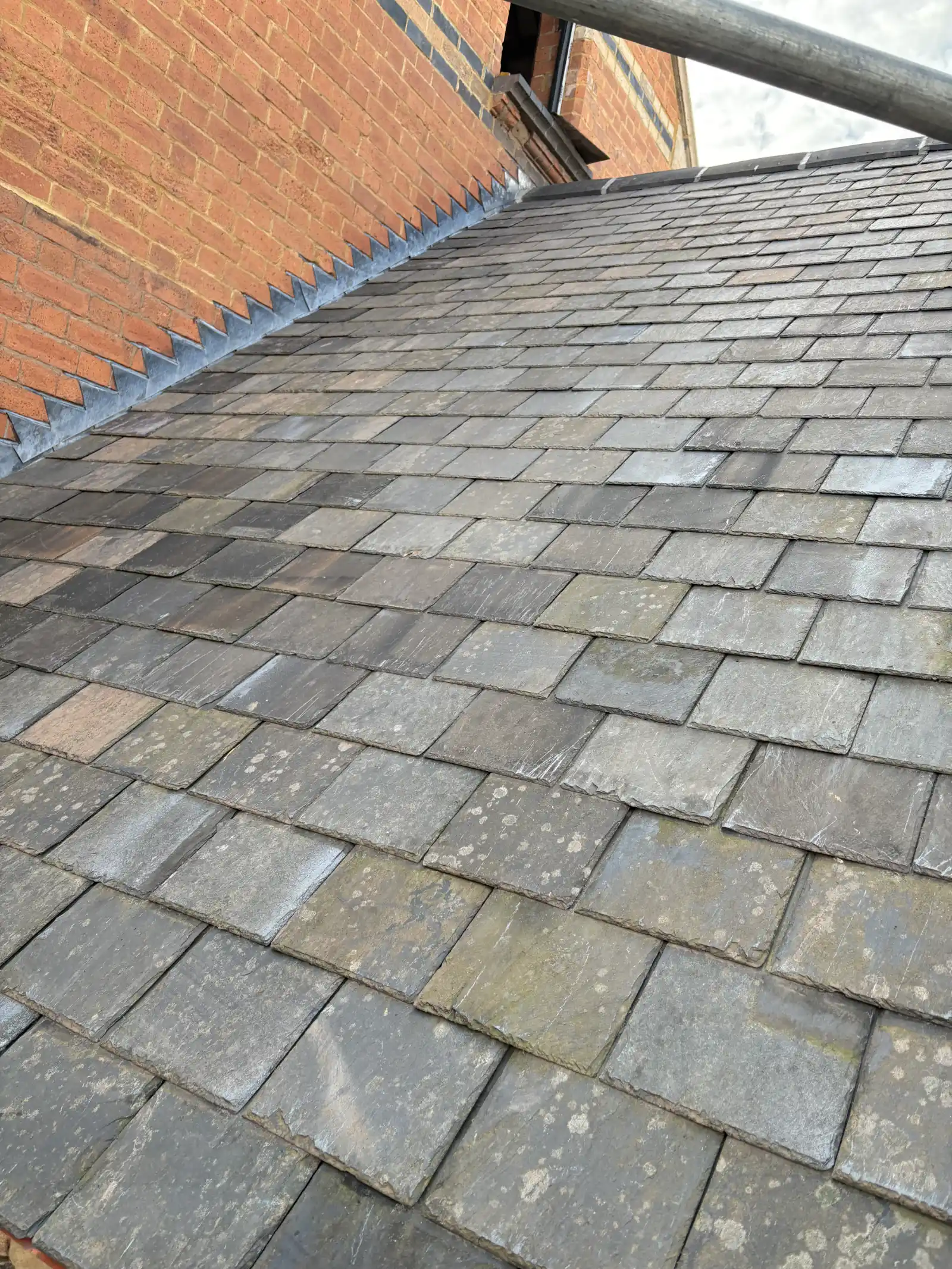
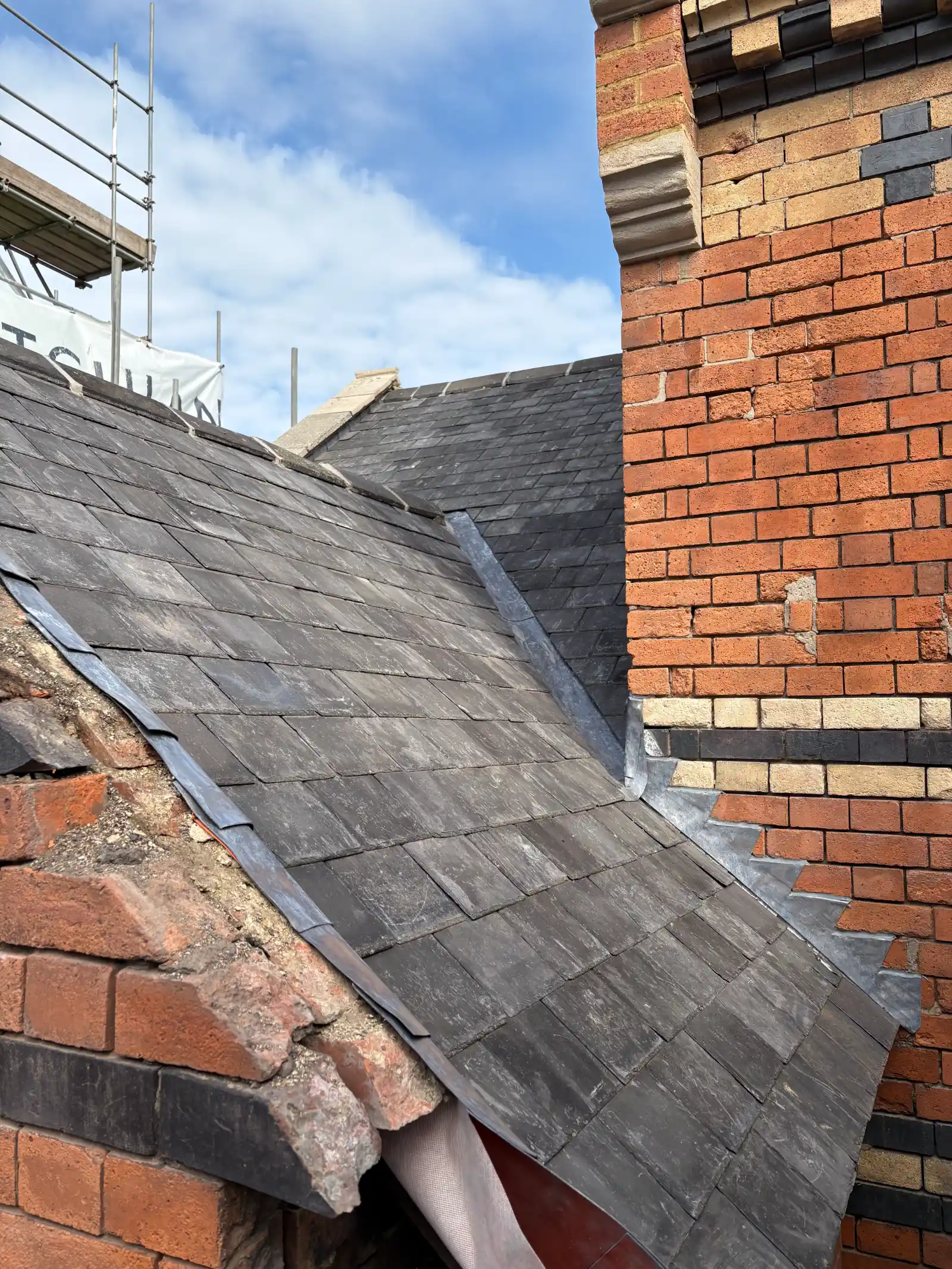
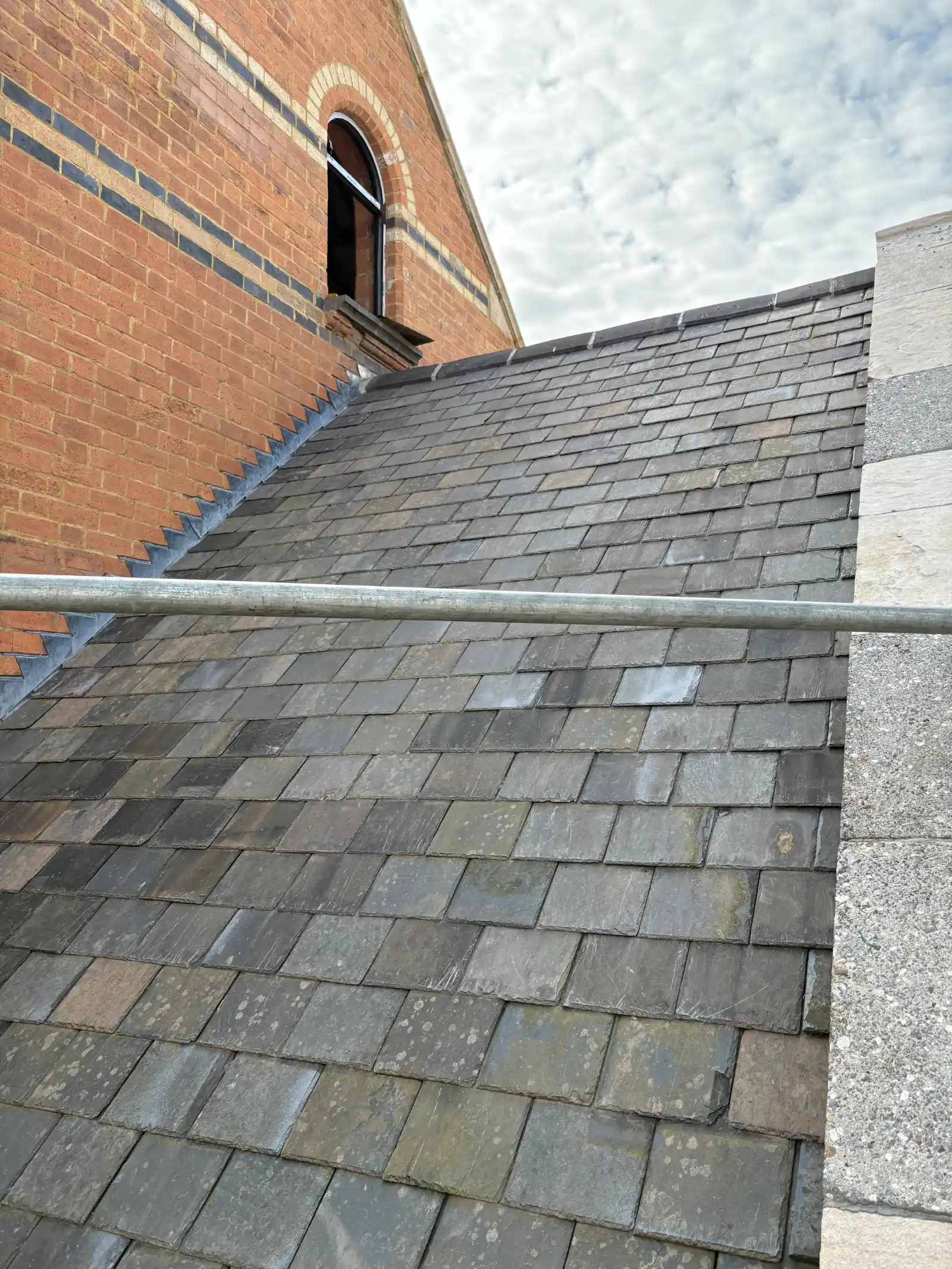
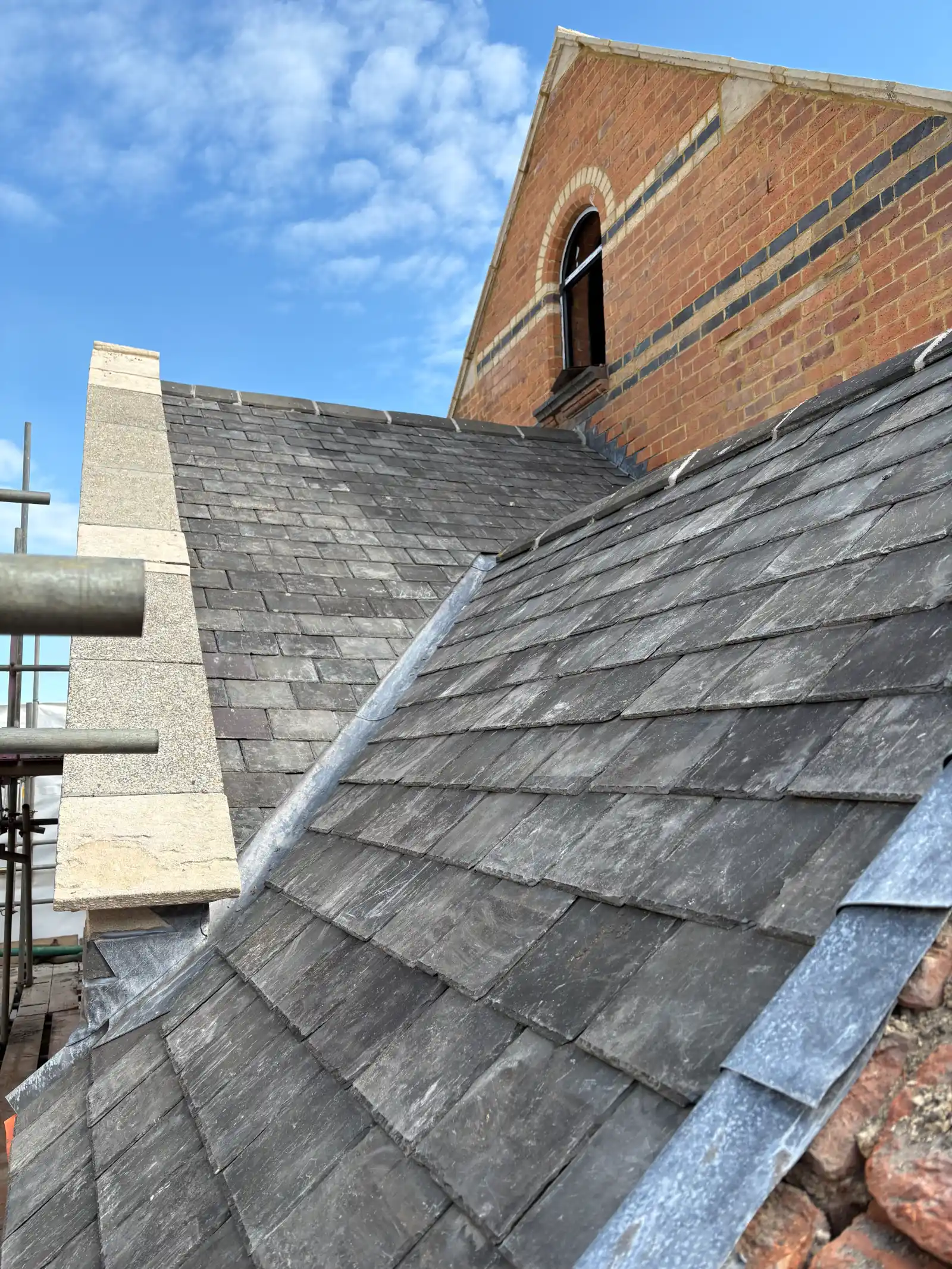
Reviews.
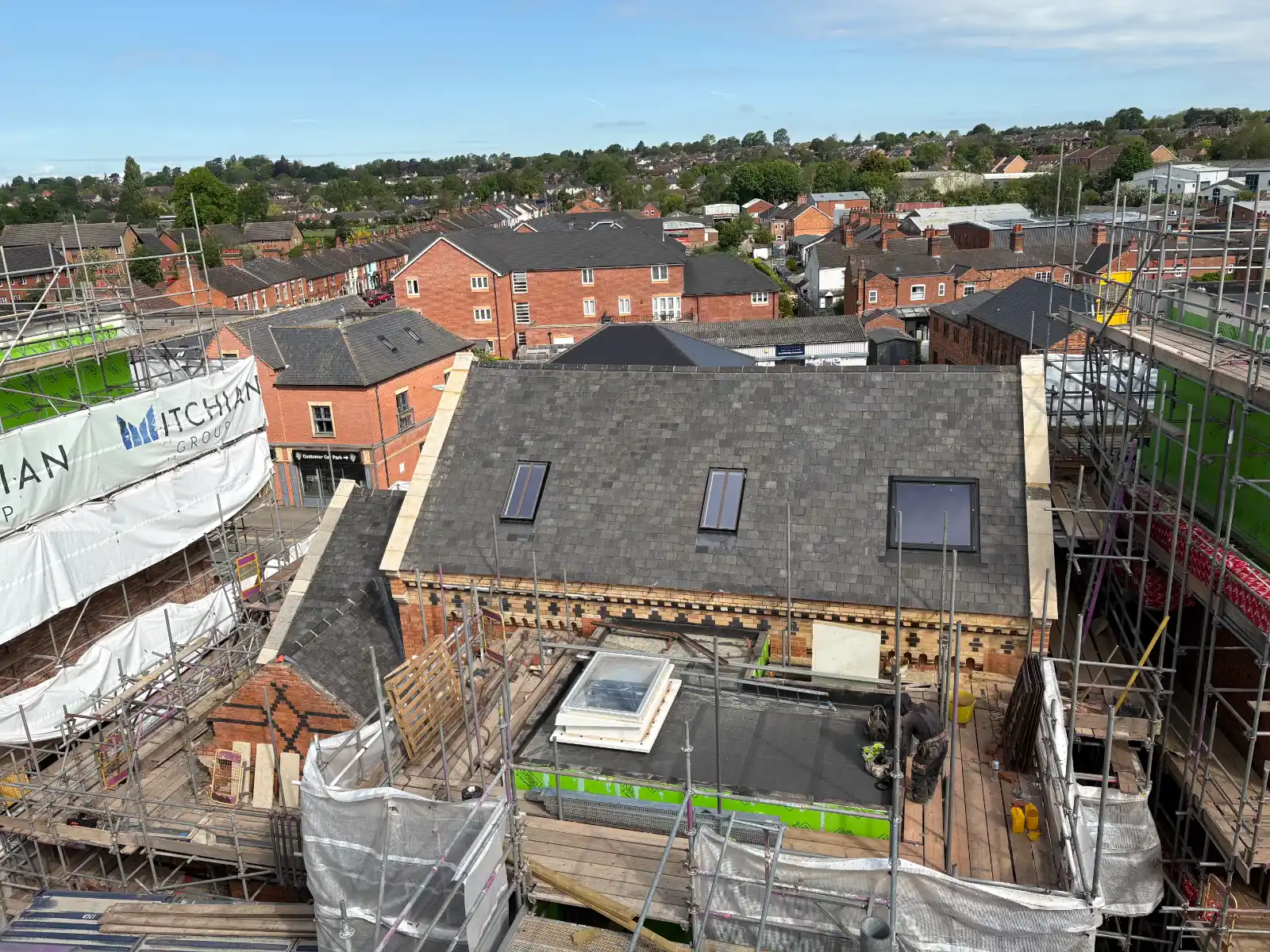
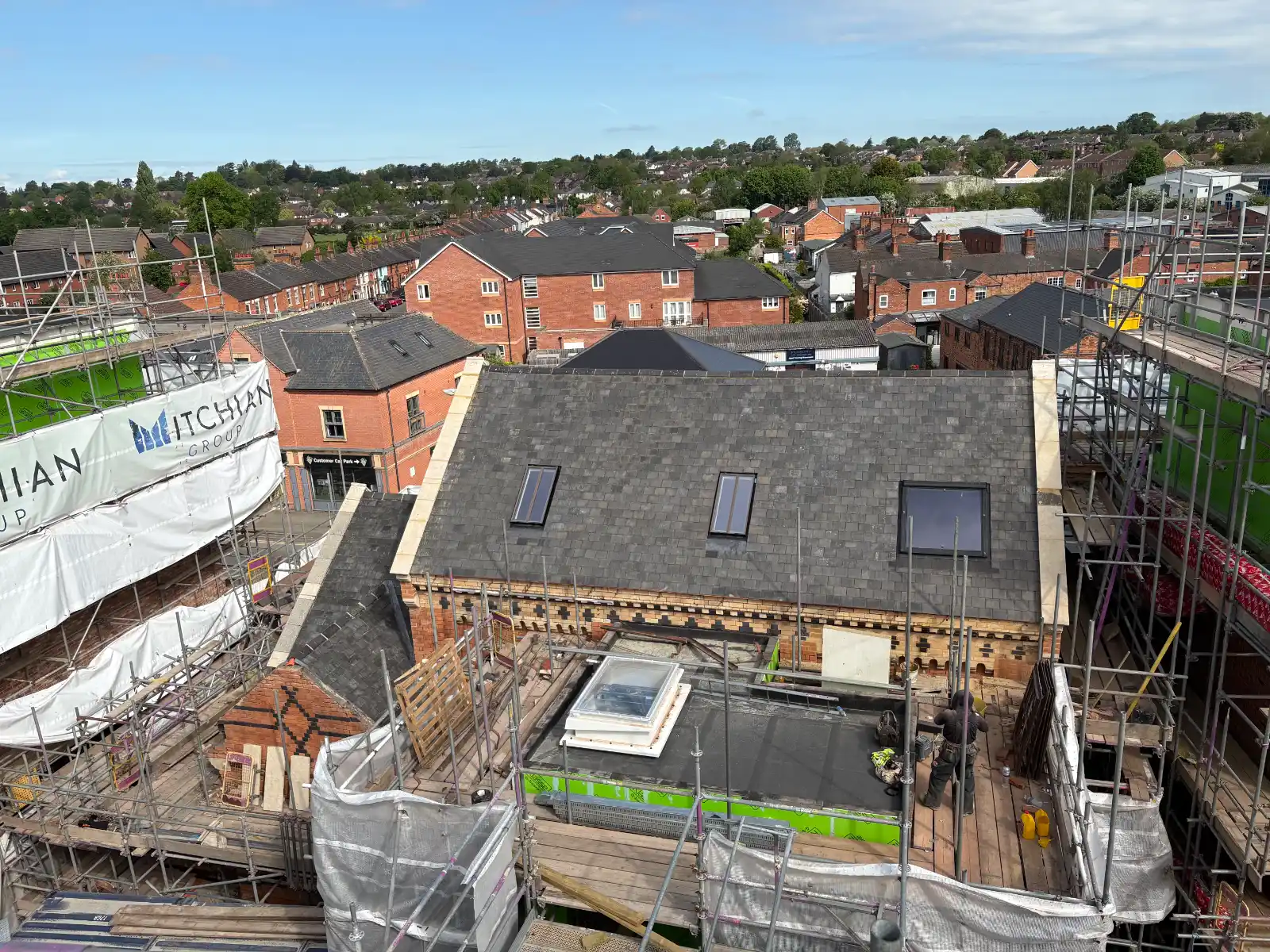
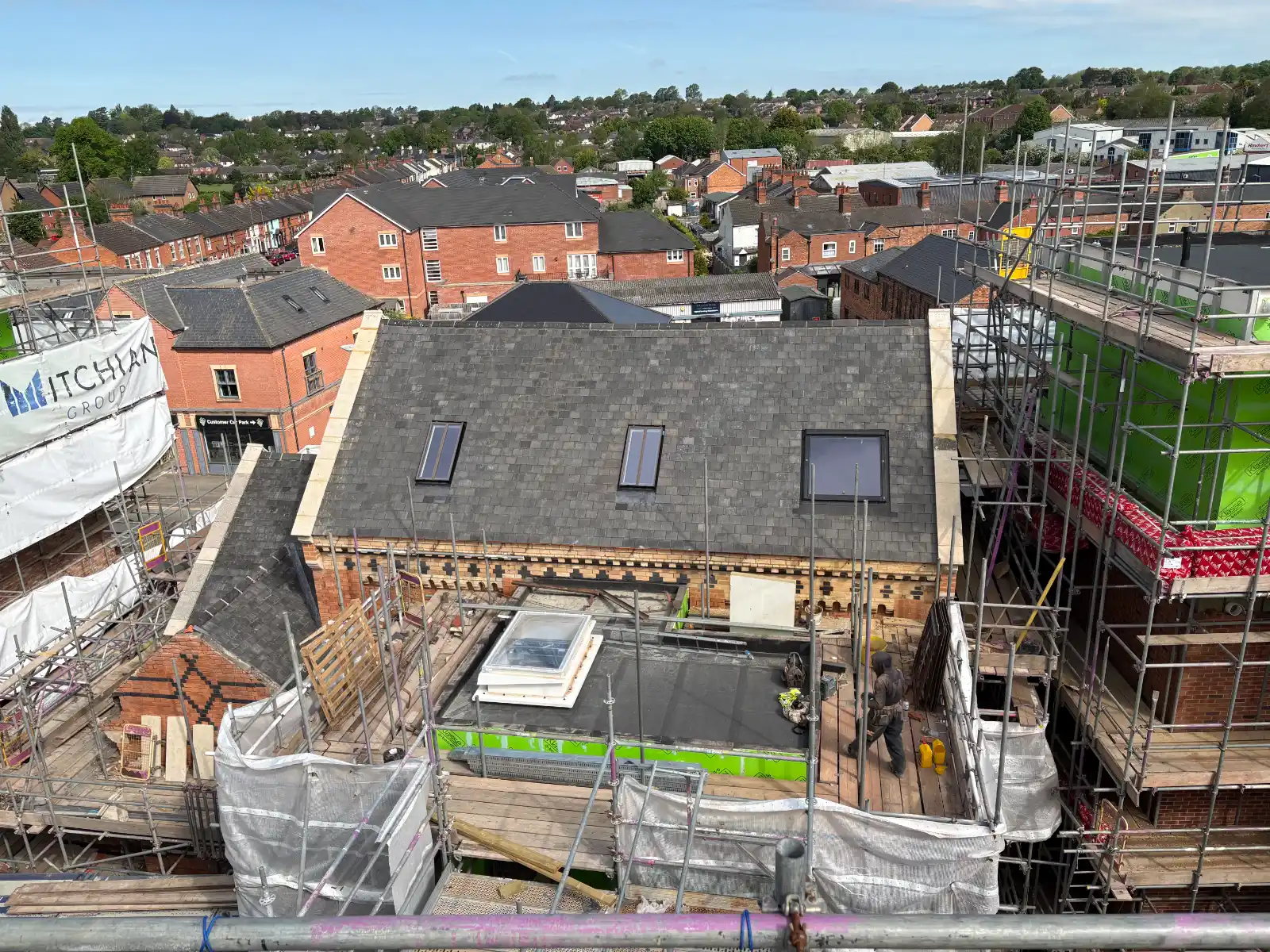
Replacement of conservation area roof
"Really happy with the work Adam and his team did on our roof. They worked quickly, stuck to the agreed budget, and kept everything straightforward. Would 100% recommend."
Great attention to detail
"A.P Roofing recently completed a large re-roof for me. The attention to detail was incredible and the lads are very polite. I can't recommend Adam and his team enough. My new go-to roofers."
Best in the business
"Had a few quotes and A.P Roofing was the best one. Adam and his team are without a doubt the best in the business — punctual, polite, friendly and hard working. Would only ever use A.P Roofing in future."
 17 verified reviews · 12 months on Checkatrade
Questions about
slate roofing in Leicester.
What's the difference between Swithland slate and Welsh slate?
Swithland is the original Leicester slate — quarried in Charnwood Forest and used on Victorian and Edwardian properties across the city. It has a distinctive grey-green colour and a rougher, more rustic texture. Welsh slate (Penrhyn or Ffestiniog) is finer-grained, bluer in colour, and more widely available new. For conservation area properties in Leicester, planners often specify matching the original material — which means Swithland for many LE1–LE3 terraces. We can source both.
How long does natural slate last?
A properly installed natural slate roof can last 80–150+ years. The original Victorian slate roofs across Leicester are testament to this. The weak points are usually the underlay (old bitumen felt degrades after 20–30 years) and the nails — which is why re-slating using the original slates is often worth doing: the slate itself is still good, it just needs to come off, the structure renewed, and the slates re-fixed.
Can you re-use the original slate?
Often yes — particularly with Swithland slate, which is difficult to source new. We'll sort through what comes off the roof: anything cracked, thin or porous goes; sound slates get cleaned and re-used. This reduces material cost and often keeps conservation planners happy, since the original material is preserved.
Do I need planning permission for a new slate roof?
In most cases, replacing like-for-like doesn't require planning permission. In a conservation area or listed building, you'll likely need consent — and the material choice will matter. We know what's typically required in Leicester's conservation areas and can advise before you apply. If you're unsure, call Adam first.
How much does a slate roof cost in Leicester?
Natural slate is more expensive than concrete tiles — materials alone cost significantly more, and fixing is slower. A typical three-bed semi re-slated in Welsh slate starts around £5,500–£9,000 depending on the size and pitch. Swithland re-slating with reclaimed slates is often comparable. The only accurate price is a free quote from Adam, who will look at what's actually there.
Can you match slate on a semi-detached where my neighbour's roof is visible?
Yes — and it's something we pay close attention to. Where two roofs are joined, a mismatch in slate colour or texture is very obvious. We'll source the closest available match, or in some cases recommend re-slating both sides at the same time if the neighbour is also due a re-roof.
Do you cover the whole of Leicestershire for slate roofing?
Yes — we work across Leicester city and the whole county: Glenfield, Oadby, Hinckley, Loughborough, Coalville, Blaby, Syston and surrounding villages. If you're not sure whether we cover your area, give Adam a call.
Tell us about your roof.
Fill in a quick brief or call Adam direct. Quotes back within one working day — usually within a few hours.