
Roof tiling
& re-tiling.
Concrete interlocking, clay plain tiles, pantiles — whatever your property needs, fixed properly to British Standard. We'll help you choose the right tile and get it right first time.
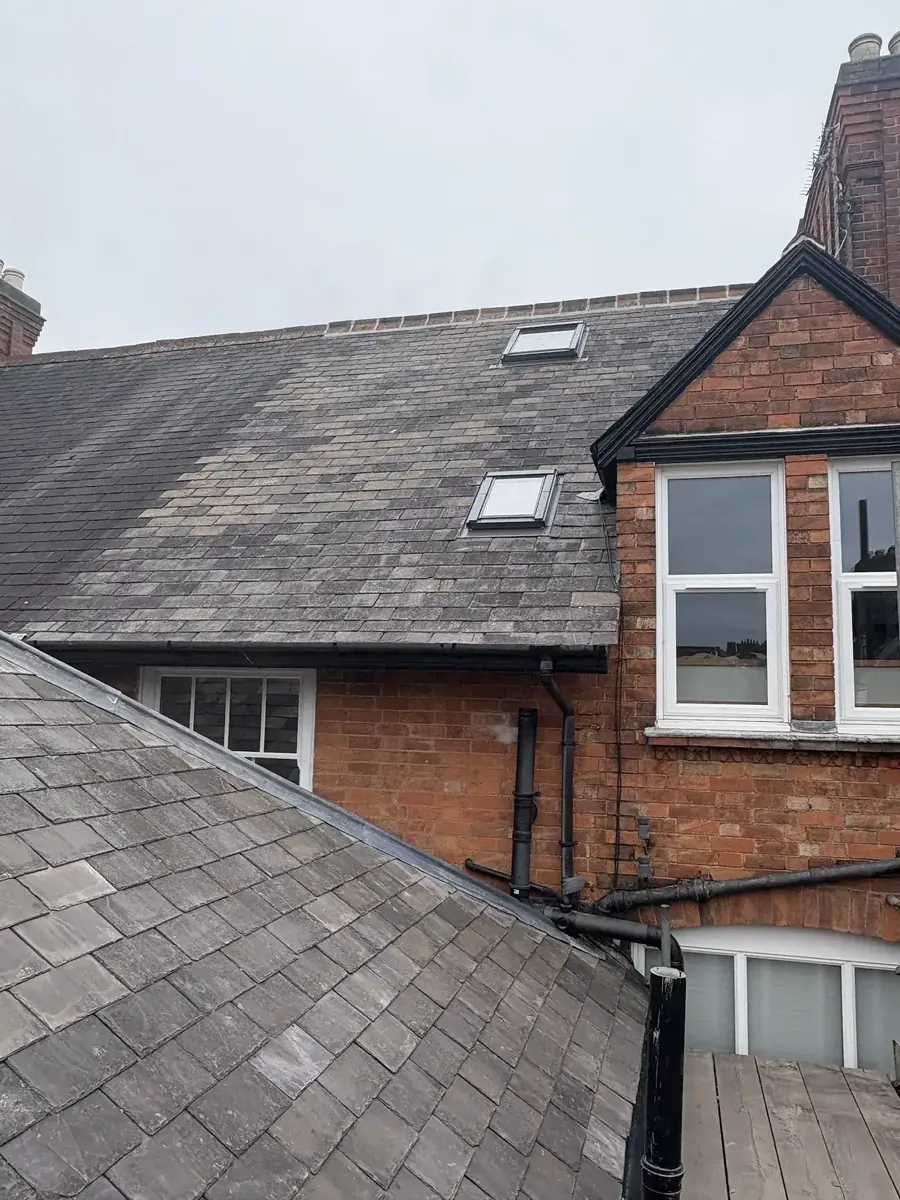
How we re-tile
your roof.
Tiling might look straightforward from the outside, but the difference between a well-tiled roof and a problem one is in the details you can't see — the underlay, the batten gauge, the eaves treatment, the dry-fix system at the ridge. We follow British Standard on every job and don't take shortcuts on the bits that matter most.
Survey & tile selection
We'll look at what's on the roof, what suits the pitch and the property, and help you choose the right tile — brand, profile and colour. We work with Marley, Redland and other leading manufacturers.
Scaffold & strip
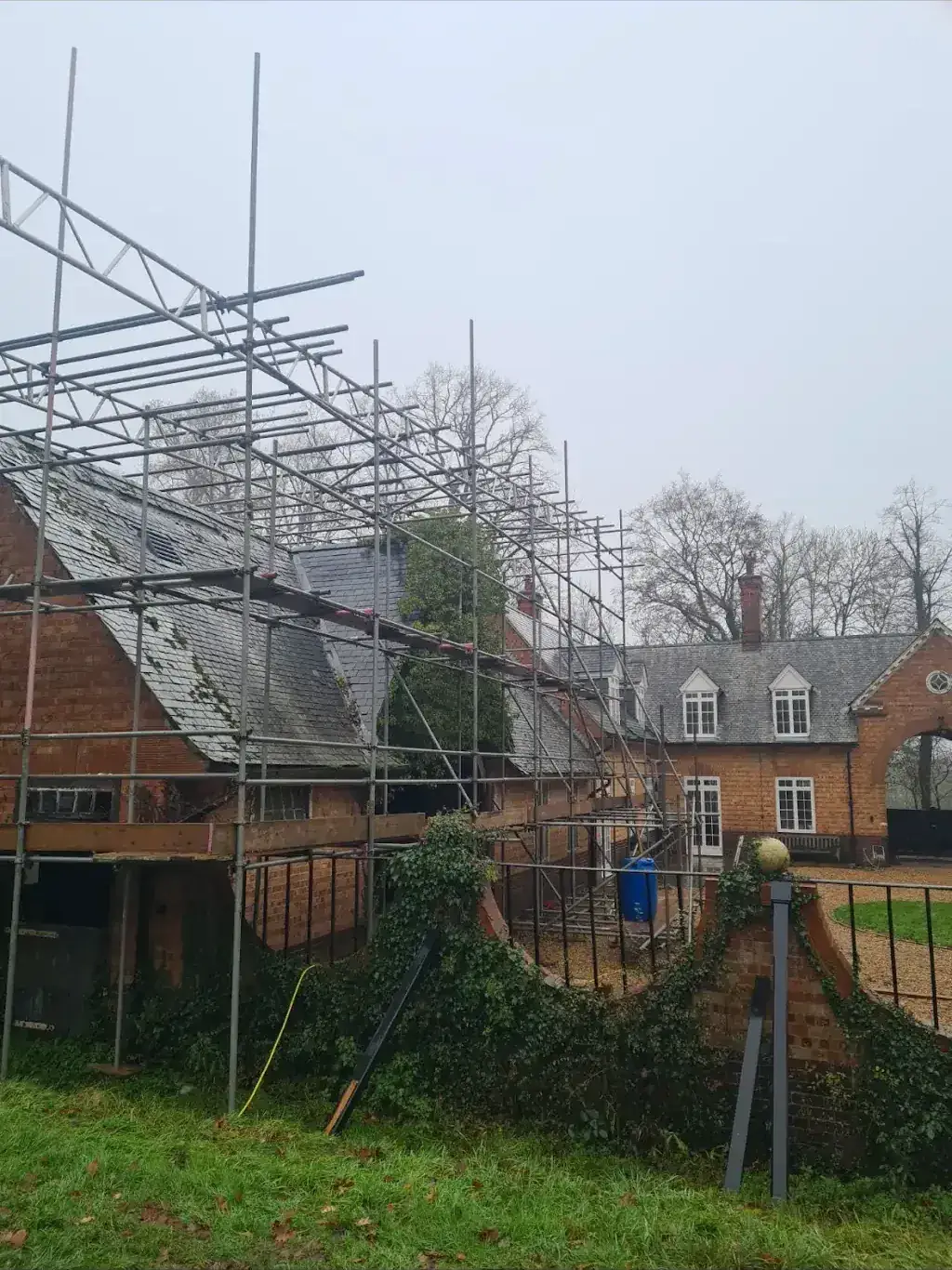
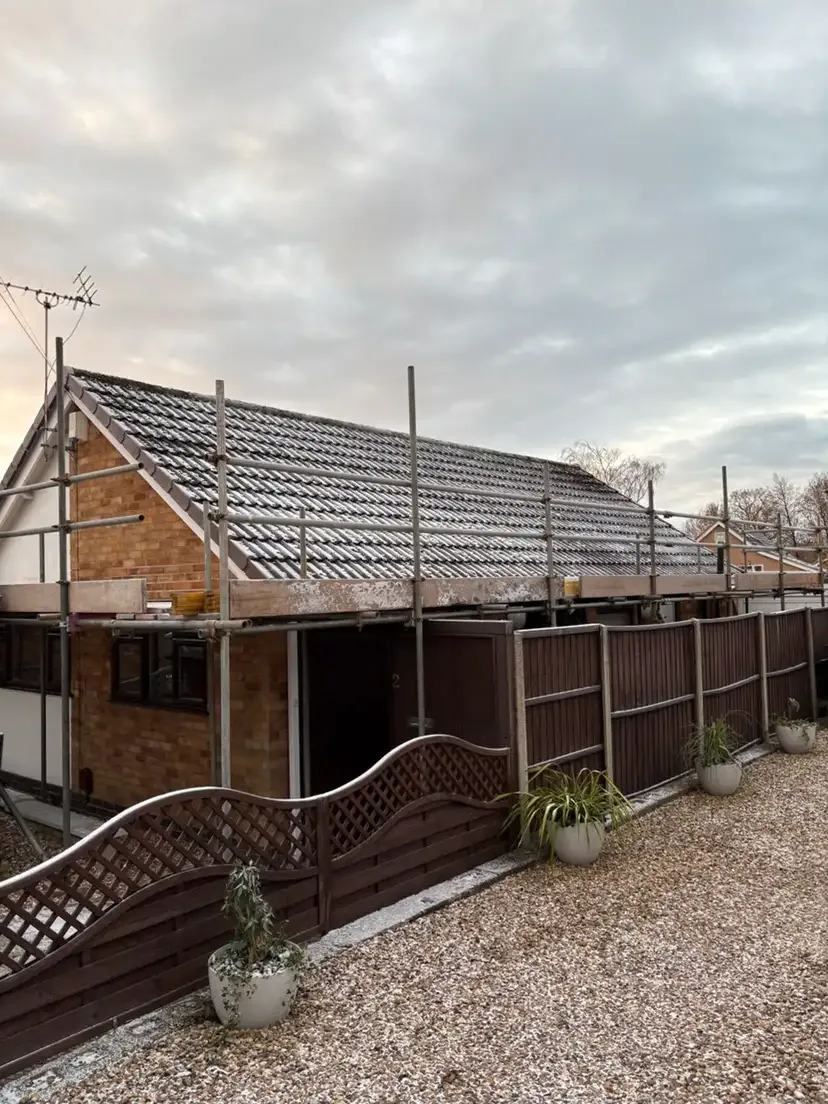
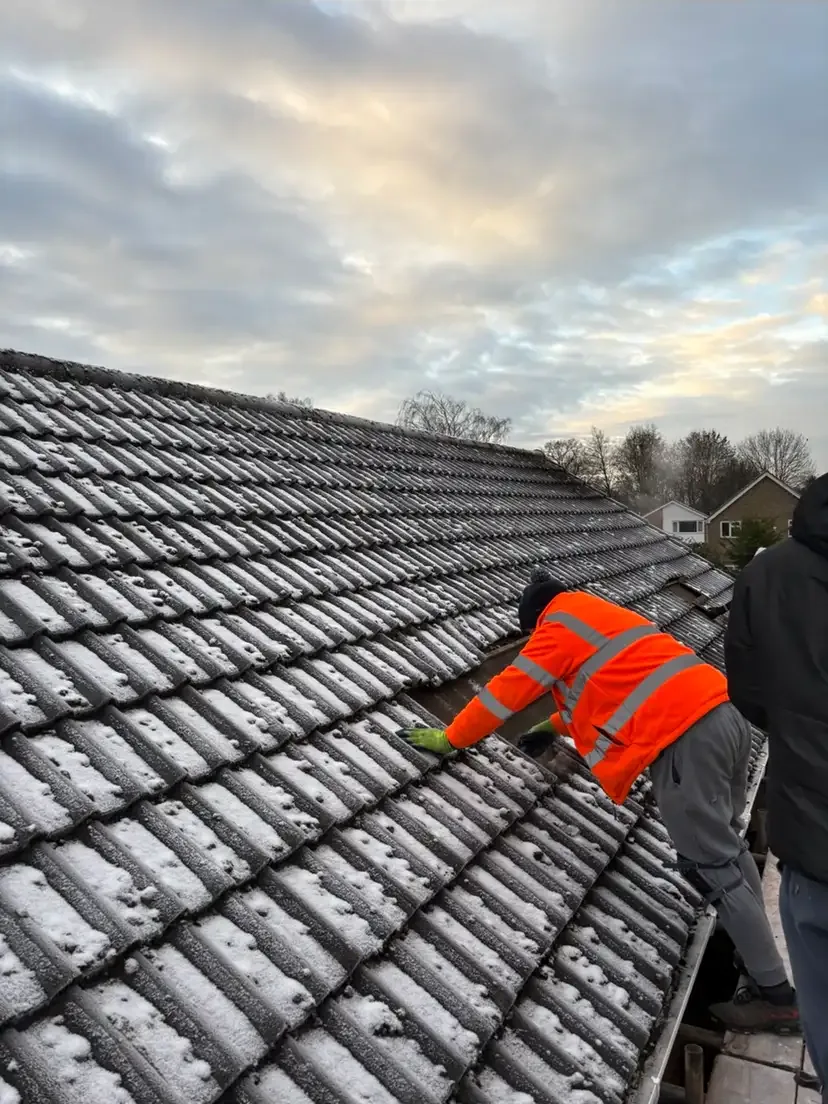
Existing covering stripped back to bare timbers. Scaffold is always included in the quote — no surprises.
Timber inspection
Every rafter, hip rafter and wall plate checked. Any rotten or inadequate timber replaced before the new underlay goes on.
Breathable membrane
Modern breathable underlay laid across the full roof. No old-style bitumen felt on a new roof — proper ventilation from the start.
Treated battens
New pressure-treated timber battens at the correct gauge for the chosen tile. Gauge is critical — get it wrong and the tiles won't discharge water correctly.
Tiling
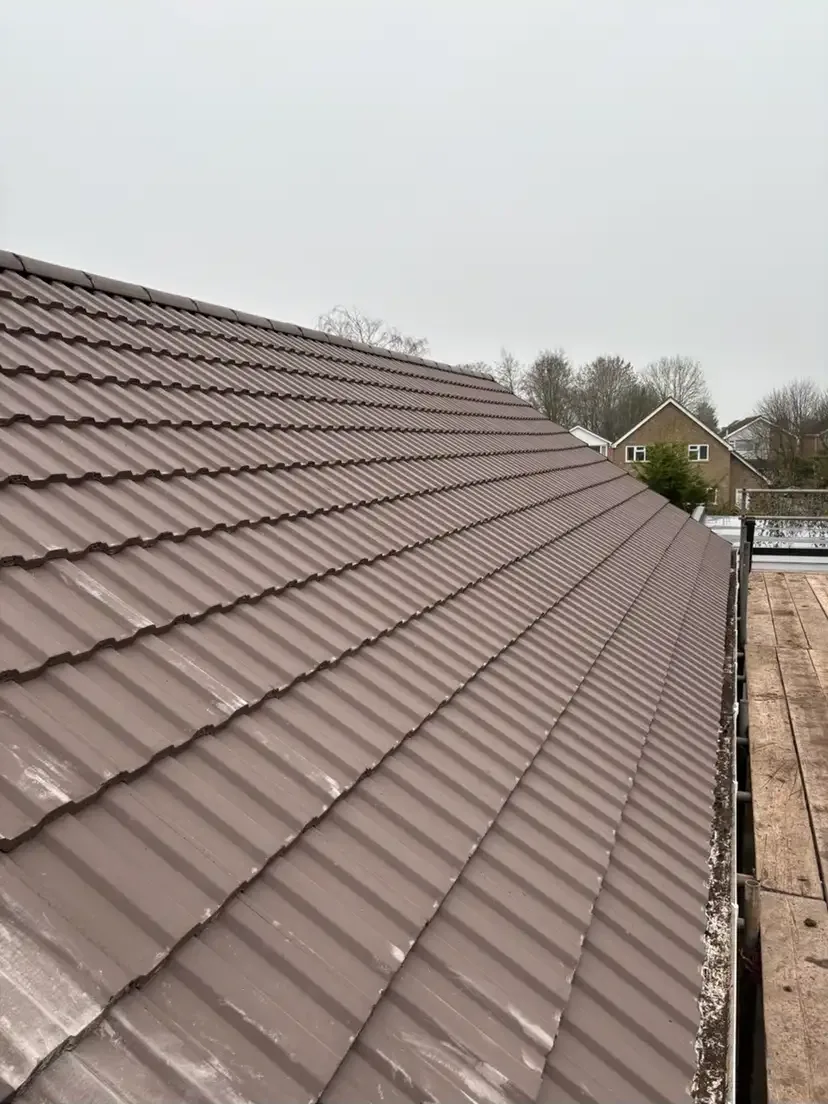
Tiles fixed from eaves to ridge with correct eaves tray, correct nail specification and correct side lap. Dry verge or mortar verge to your preference. Valleys leaded or with a dry valley system.
Ridge & finishing
Ridge tiles dry-fixed or traditionally mortar-bedded, hips finished, all abutment flashings completed, site left clean and clear.
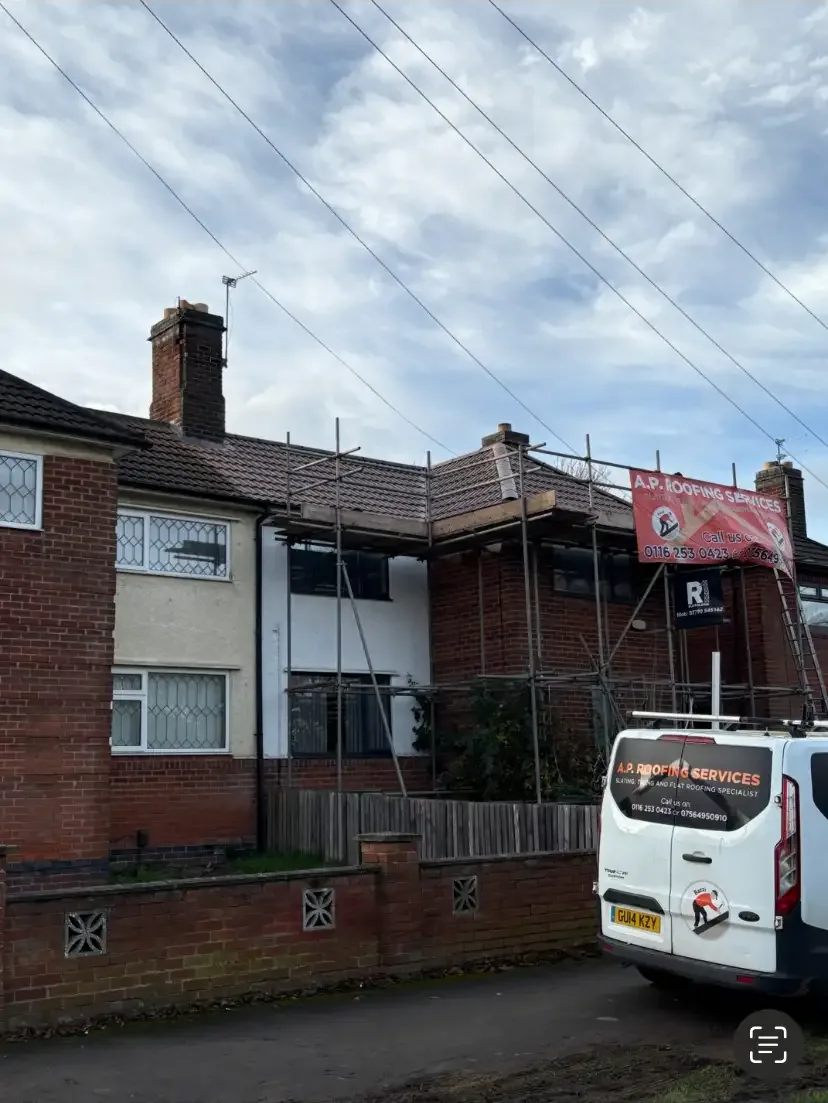
Why choose A.P Roofing
for your tiling?
26 years on tile roofs
Adam has been tiling roofs since he was 16 — concrete, clay, pantile and profile. He knows which tile suits which pitch and which property.
British Standard throughout
We follow BS 5534 on every tiled roof. The right batten gauge, the right nail count, the right eaves treatment — not what's quickest.
Marley, Redland & more
We work with the leading tile manufacturers and can advise which profile suits your property, your neighbour's roof, and your budget.
No deposit, pay on completion
We don't ask for money upfront. You pay when the job's done and you're happy with it.
Same crew, every job
Four lads. No subcontractors — the team that quotes the job is the team on the roof.
Photos at every stage
Structure before it's covered, tiling in progress, finished result. You get a full record of the job.
Reviews.
Replacement of conservation area roof
"Really happy with the work Adam and his team did on our roof. They worked quickly, stuck to the agreed budget, and kept everything straightforward. Would 100% recommend."
Great attention to detail
"A.P Roofing recently completed a large re-roof for me. The attention to detail was incredible and the lads are very polite. I can't recommend Adam and his team enough. My new go-to roofers."
Best in the business
"Had a few quotes and A.P Roofing was the best one. Adam and his team are without a doubt the best in the business — punctual, polite, friendly and hard working. Would only ever use A.P Roofing in future."
 17 verified reviews · 12 months on Checkatrade
Questions about
roof tiling in Leicester.
How long does a re-tile take in Leicester?
A standard three-bed semi typically takes 4–6 days from scaffold up to scaffold down. A larger Victorian or Edwardian property with a steeper pitch or more complex layout — common in LE2 and LE3 — may take a full week to ten days. We'll give you a realistic timescale when we come to quote.
What's the best tile for a Leicester semi?
For a post-war or 1960s–1980s semi, a good-quality concrete interlocking tile — Marley Ludlow Plus or Redland 49 — is usually the right call. It's durable, cost-effective and widely used across Leicester's housing stock. For older Victorian properties, a clay plain tile or pantile often looks better and may be required in a conservation area.
Can I change from slate to tiles, or vice versa?
It depends on the pitch. Some tiles have a minimum recommended pitch — below that and water can be driven in under the lap. Slate is more flexible at lower pitches. If you're thinking of switching material, call Adam and he'll tell you whether the pitch of your roof allows it.
Do concrete tiles need replacing all at once, or can you just do part of the roof?
You can replace sections, but it's not always the best option. If the tile is discontinued and you can't match it exactly, a partial re-tile will look patchy. If the underlay has gone across the whole roof — which is common after 25–30 years — it's often better value to do the whole job properly rather than patch sections that will keep failing. We'll tell you honestly which applies to your roof.
What's the difference between concrete and clay tiles?
Concrete interlocking tiles are more affordable and widely used on modern housing. Clay plain tiles are thinner, lighter and have a more traditional appearance — well suited to older properties and conservation areas. Clay tiles typically last longer but cost more. We can advise on the right choice for your property.
Do you supply and fit tiles, or do I need to source them?
We supply everything — tiles, underlay, battens, fixings and all ancillary materials. You don't need to source anything yourself. The quote we give you covers materials and labour in full.
Do you cover areas outside Leicester for tiling?
Yes — we work across Leicestershire: Glenfield, Oadby, Hinckley, Loughborough, Coalville, Blaby, Syston and surrounding towns and villages. If you're not sure whether we cover your area, call Adam.
Tell us about your roof.
Fill in a quick brief or call Adam direct. Quotes back within one working day — usually within a few hours.